EcoSorter AI
Details
Collaborators
Poster
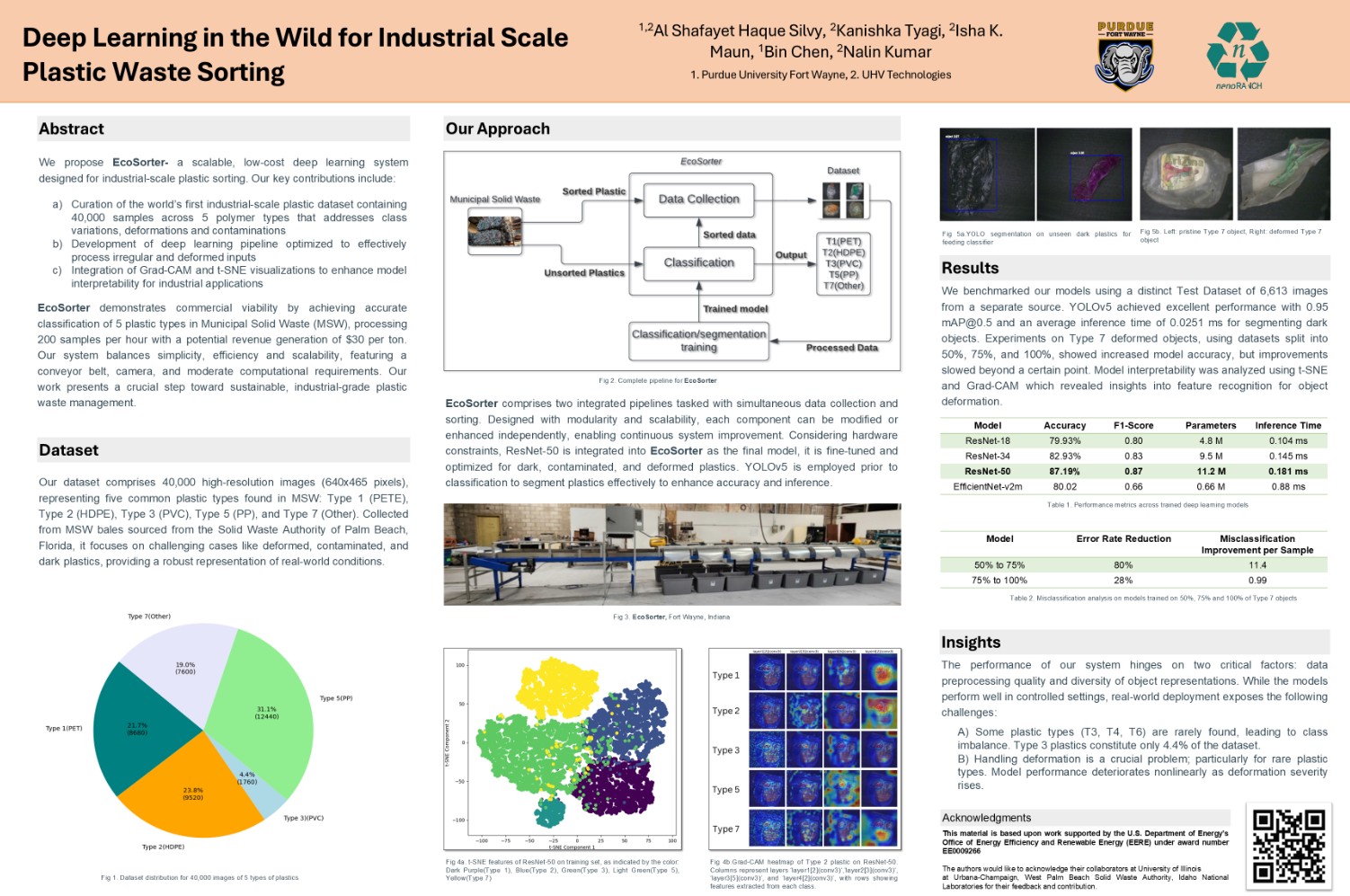
Presented at NeurIPS 2024 Conference
Technical Visualizations
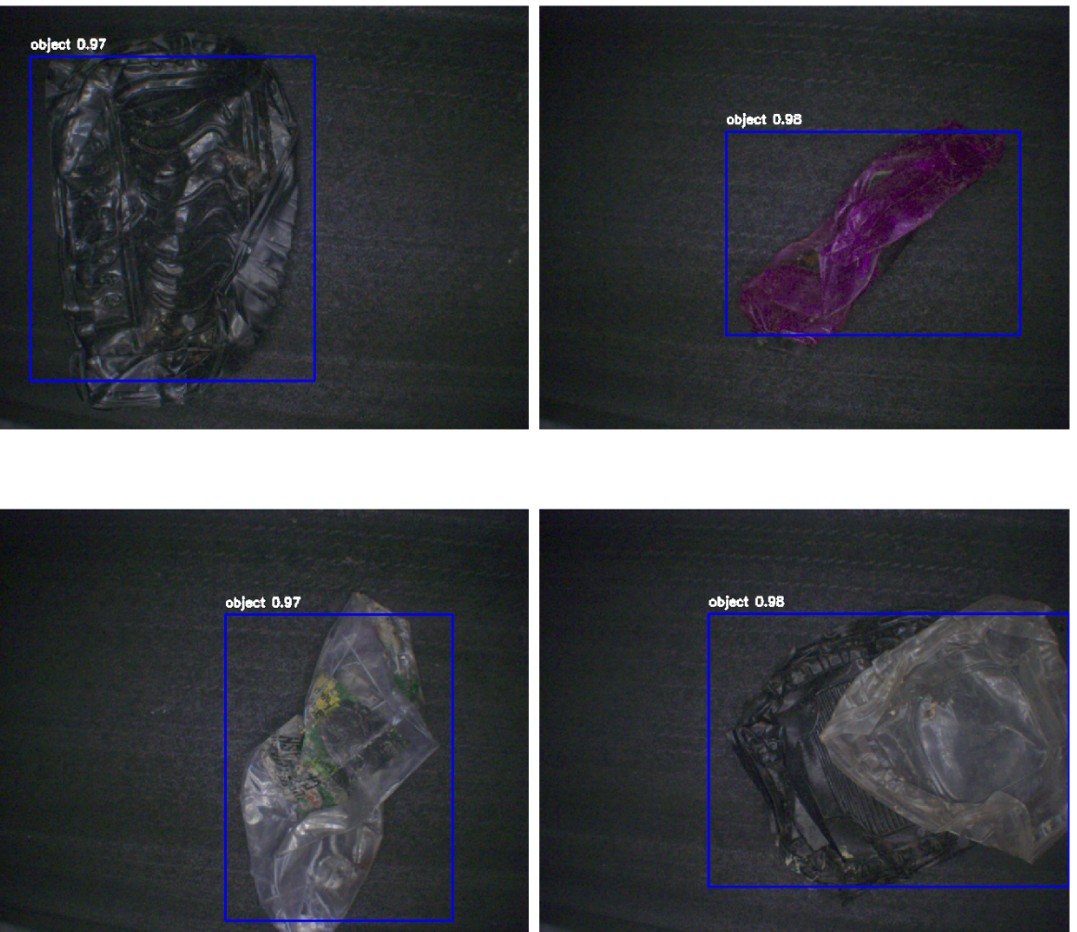
Problem Statement
Current plastic sorting methods face critical challenges:
- Manual Sorting Limitations: Labor-intensive, error-prone, slow processing, and poses health risks to workers
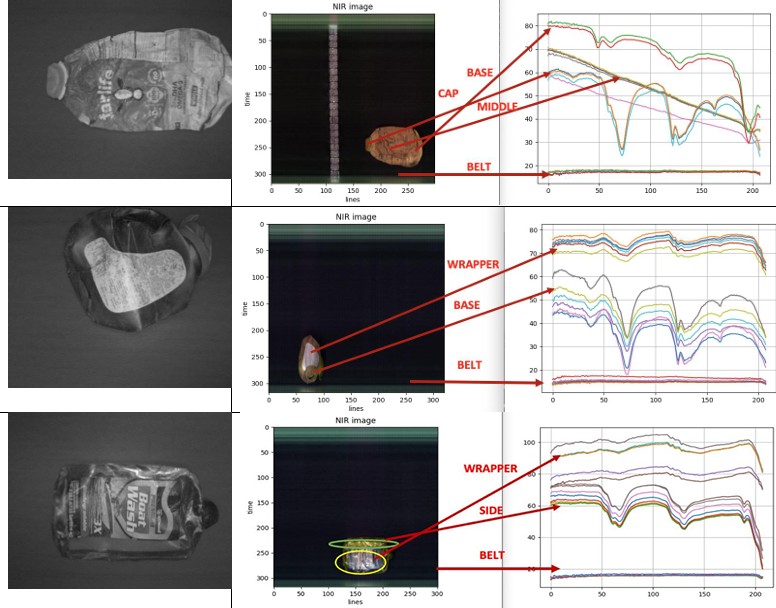
- Sensor Technology Gaps: NIR cannot detect black plastics or multi-layer materials; MIR struggles with multi-layer packaging; XRF cannot identify organic components
- Economic Barriers: Multi-sensor systems require substantial capital investment (~$16,000+ for portable NIR units alone)
- Contamination Issues: Mixed plastic types and PVC contamination (<0.3% tolerance for food-grade applications) reduce recycling quality
- Scale Challenge: Only 9% of 400 million tonnes annual plastic production is effectively recycled globally
Our Solution
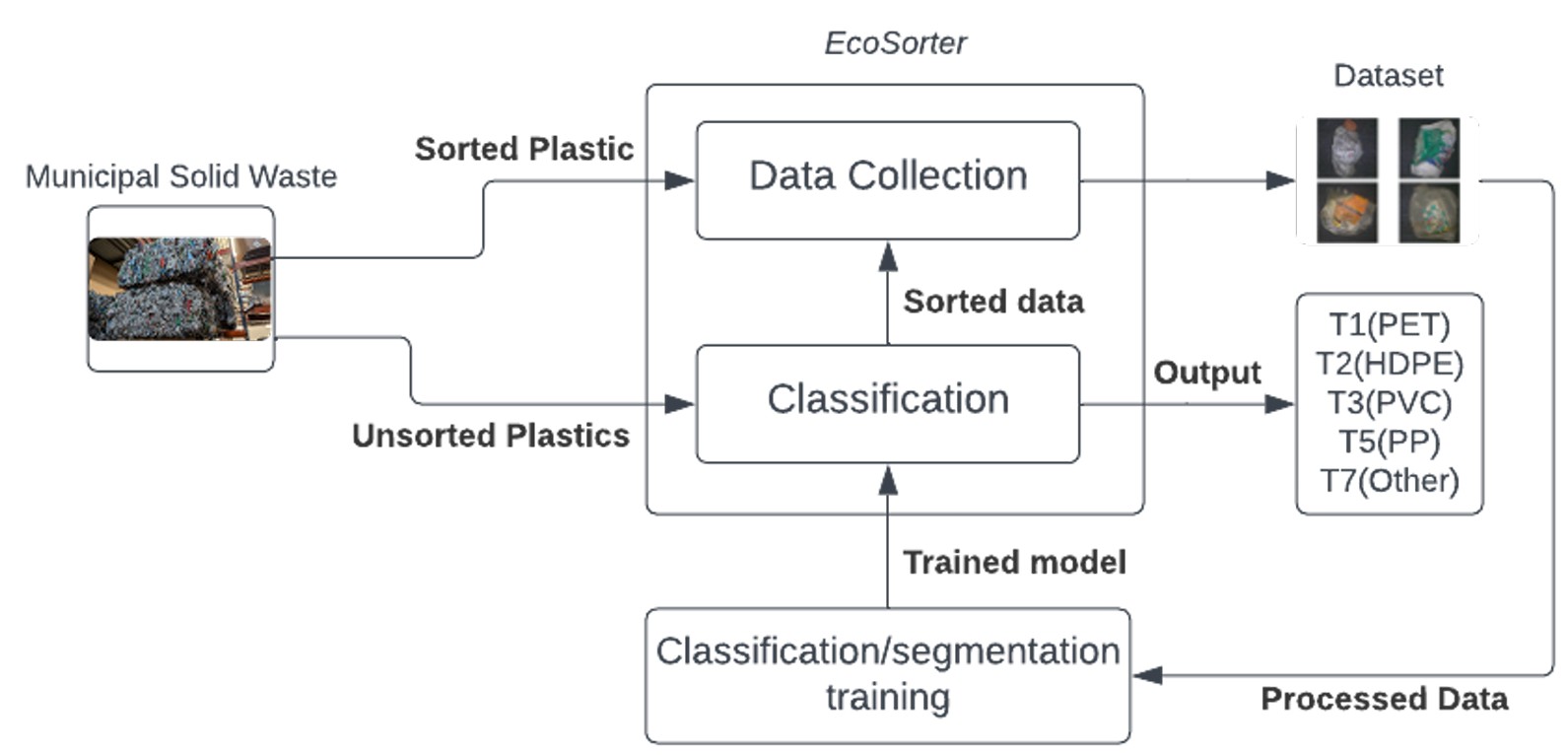
Three-Component System Architecture
1. Multi-Sensor Fingerprinting Process
NIR Spectroscopy (1100-1700nm): KUSTA LLA systems with 7nm spectral resolution, 30-70 fps, for polymer identification
MIR Analysis (2.5-5.0 μm): Specim FX50 system for surface chemistry and black plastic detection
XRF Detection: Amtek analyzer with 50kV X-ray tube for elemental composition (Na to U)
Visual Data: Dual Basler ace cameras (1920x1200, 150fps) with synchronized LED illumination
2. Deep Learning Pipeline
Data Collection: Collected from Florida MRF facilities - 33,387 images across 5 plastic types with each object captured 3+ times from different angles
Preprocessing: Color normalization, dynamic background subtraction, adaptive thresholding, standardization to 224x224 pixels
Data Augmentation: Rotations, brightness variations, Gaussian noise, flipping, cropping, auto-contrast, affine transformations
Model Architecture:
• ResNet-50: Modified with custom FC layers, LeakyReLU activation, dropout (0.7), 11.3M trainable parameters → 87.19% accuracy
• EfficientNet-B4: Compound scaling approach with transfer learning → 91.85% accuracy (0.385ms inference)
• YOLOv5: 640x640 resolution for object detection and segmentation → processes objects in 0.0251s
Training Strategy: 70/20/10 train/validation/test split, transfer learning from ImageNet, class weighting for imbalanced data (Type 3 PVC only 4.4% of dataset)
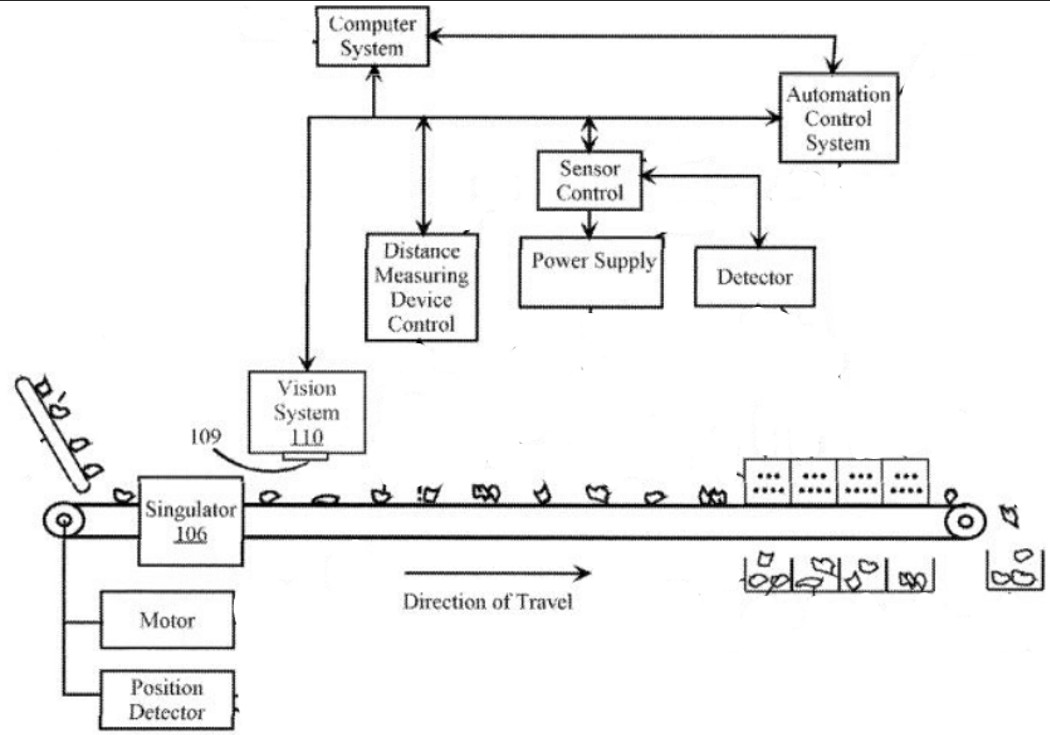
3. Industrial Deployment System
Hardware: Consumer-grade AMD Ryzen 7, 32GB RAM, NVIDIA GTX 1080 GPU, Ubuntu 22.04, CUDA 11
Real-time Processing: UDP communication protocol, Python multiprocessing, circular buffers for hyperspectral imaging
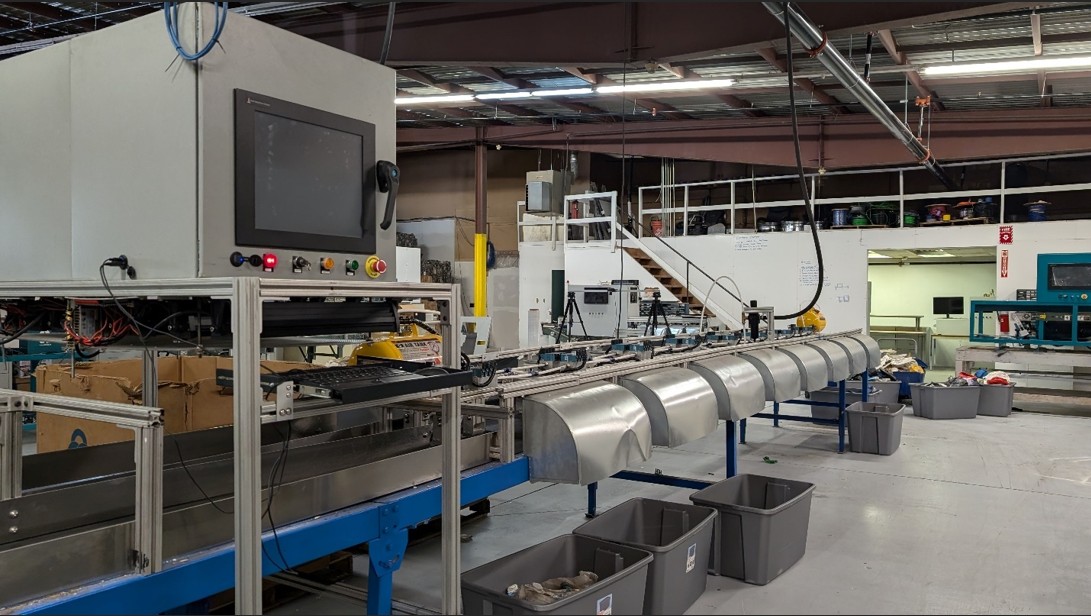
Conveyor Integration: Wenglor OPT2003 laser detection, dynamic image capture with exposure adjustment, vibratory feeders for material separation
Processing Rate: 60 samples per minute (limited by RGB camera capture time)
Quality Control: Continuous monitoring, automated calibration with reference materials, <5% misdetection rate for transparent plastics
EcoSorter Performance
Key Findings:
- Dataset Distribution: Type 1/PET (10,246), Type 2/HDPE (10,935), Type 3/PVC (3,468), Type 5/PP (15,393 images), Type 7/Mix (9,345)
- Challenge Areas: Type 3 (PVC) shows lower accuracy due to dataset imbalance and visual similarity to other types
- Deformed Object Analysis: Training on 50% dataset → 51% accuracy; 75% dataset → 89.93% accuracy; 100% dataset → 93.75% accuracy
- Misclassification Pattern: Most errors occur between Type 1 ↔ Type 5 due to visual similarities
Impact & Applications
Environmental Impact
- Reduces contamination in recycling streams by enabling 93%+ sorting precision
- Enables recovery of 2.6 million tons of multi-layer packaging currently sent to landfills/incineration
- Supports circular economy by creating novel material streams from previously non-recyclable plastics
- Addresses critical PVC contamination issue (must be <0.3% for food-grade applications)
Industrial Applications
- Material Recovery Facilities (MRFs) - validated at Solid Waste Authority of Palm Beach County, Florida
- Chemical recycling feedstock preparation
- Food-grade packaging recycling (requiring high purity levels)
- Automotive parts recycling
- Electronics/E-waste plastic recovery
Economic Benefits
- Processing Cost: $20-30 per ton vs. $500 per ton for conventional mechanical recycling
- Market Opportunity: $2-3 billion annually in the United States alone
- Hardware Cost Reduction: Consumer-grade GPU system vs. expensive multi-sensor arrays ($16,000+ for portable NIR alone)
- Labor Cost Reduction: Automated sorting eliminates health risks and manual sorting bottlenecks
- Increased Material Value: High-purity sorted streams command premium prices
Technical Innovations
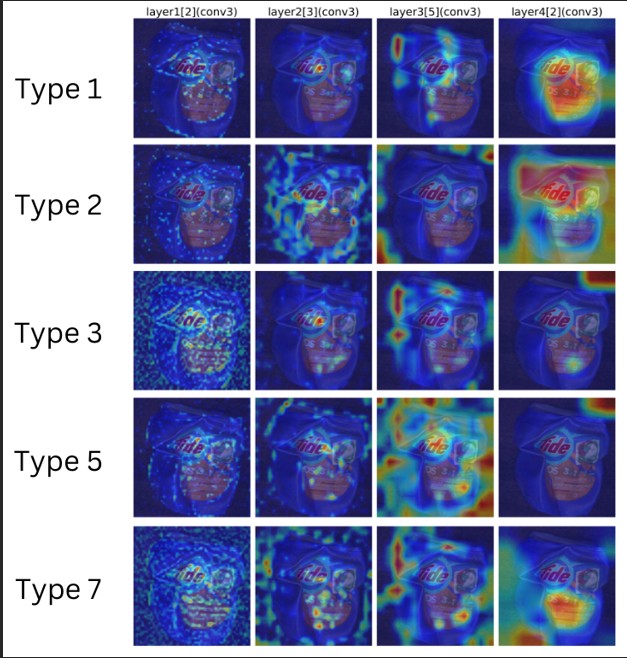
- Model Interpretability: Grad-CAM and t-SNE visualizations for understanding classification decisions
- Dark Plastic Detection: Successfully identifies black plastics that NIR cannot detect
- Multi-layer Material Classification: Handles complex packaging structures